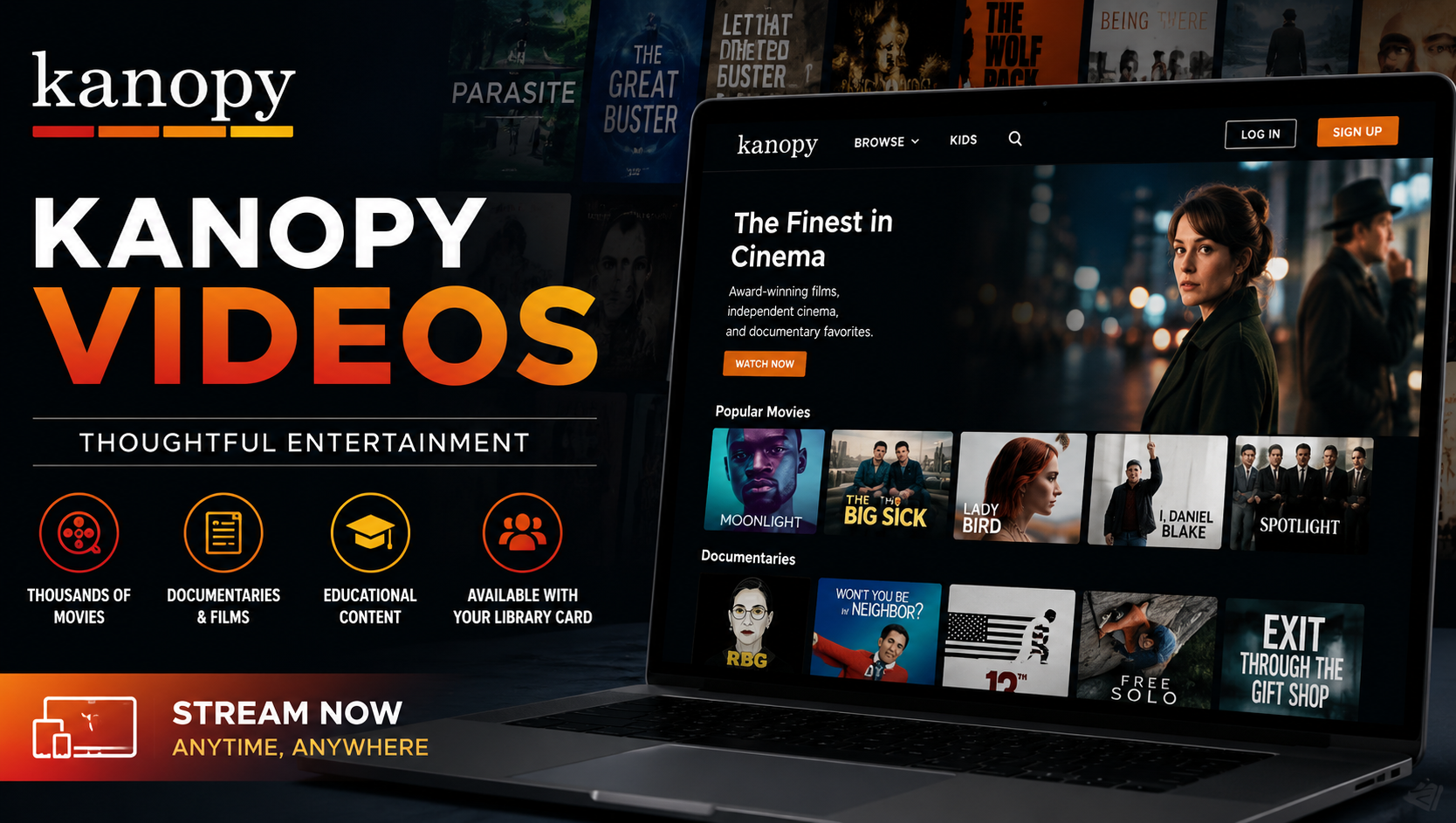
In an era dominated by commercial subscription platforms, Kanopy stands out as a hidden gem for cinema lovers, students, and educators. By partnering with public libraries and universities around the globe, Kanopy provides free access to thousands of acclaimed indie films, award-winning documentaries, foreign cinema classics, and educational material. However, one major limitation continues to frustrate frequent travelers and commuters: the platform requires an active internet connection to stream content. If you are preparing for a long flight, a remote camping trip, or simply have a spotty internet connection, knowing how to access Kanopy Videos without a live internet connection becomes essential.
This comprehensive guide breaks down everything you need to know about watching your favorite content offline, the technical mechanics of streaming platforms, third-party saving options, legal considerations, and practical workarounds for enjoying Kanopy Videos anywhere you go.
Visit Now: https://gtasanguide.site/
Understanding Kanopy and the Offline Viewing Dilemma
Kanopy operates under a unique digital licensing model supported by participating public libraries and higher education institutions. Instead of paying a flat monthly fee like traditional streaming platforms, your local library or university covers the cost per view using a monthly ticket system. Because of these strict digital distribution agreements, the platform is designed primarily as an on-demand streaming service.
Many users wonder why a simple download button is missing from the interface. Unlike mainstream platforms that offer native offline modes within their mobile apps, Kanopy requires a continuous broadband connection to authenticate ticket usage, manage session tokens, and ensure rights compliance.
While this model keeps the platform completely free and ad-free for public library cardholders, it presents a challenge for users who want to watch media offline. Understanding the underlying technology helps in choosing the right methods to save or record content legally and safely for personal use.
The Official Stance on Downloading Kanopy Videos
From an official standpoint, the platform does not offer a direct, built-in download feature for Kanopy Videos. According to official help documentation and terms of service, all media must be streamed directly through a supported web browser, mobile app, or smart TV application.
The platform utilizes Digital Rights Management (DRM) technology to prevent unauthorized distribution and file copying. When you press play, your browser connects to secure streaming servers that supply encrypted data chunks in real time.
Platform Availability and Feature Overview
| Feature / Aspect | Official Support Status | Notes & Capabilities |
| Native Offline Mode | Not Supported | Requires an active internet connection at all times |
| Mobile App Support | Supported (iOS & Android) | Streaming only; no offline cache allowed |
| Smart TV Apps | Supported (Roku, Apple TV, Fire TV) | Streaming only in HD resolutions |
| Ticket System Integration | Active | Plays deduct monthly credits from your library account |
| Subtitle & Caption Support | Fully Supported | Closed captions and transcripts available for all titles |
Because a native button does not exist, users who require offline viewing must look at alternative methods to process and capture media. Before trying any third-party tools, it is crucial to understand how users interact with Kanopy Videos across different operating systems and devices.
Read More: 9 Best YouTube to MP3 Converters in 2026 (Safe & Fast)
Digital Rights Management (DRM) and Content Security
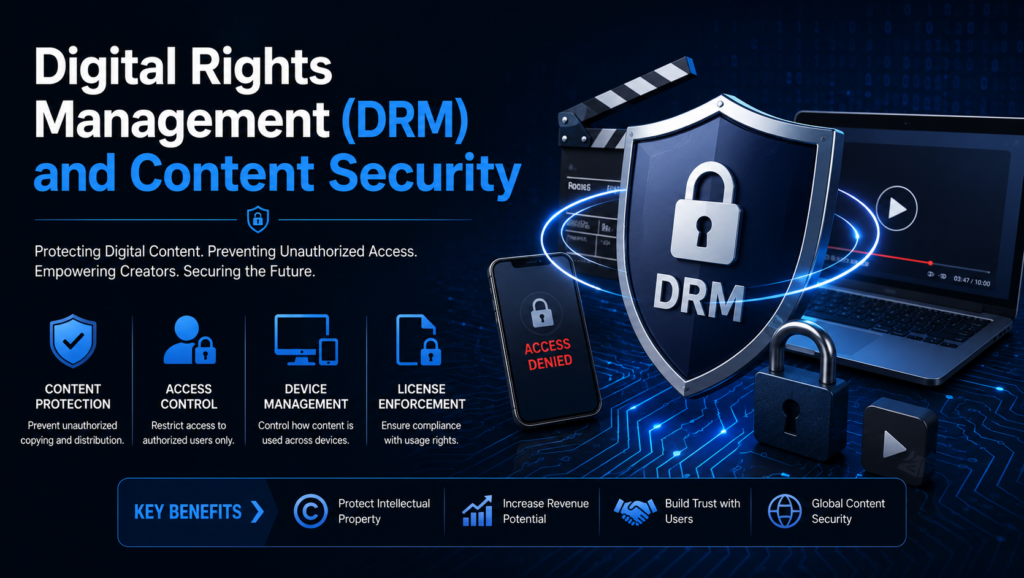
To successfully save media for offline playback, one must understand the security layers attached to Kanopy Videos. Modern streaming sites rely on advanced content protection standards to safeguard intellectual property.
- Widevine DRM: Primarily used across Google Chrome, Android devices, and Firefox browsers to deliver encrypted streams.
- FairPlay Streaming: Apple’s proprietary encryption technology utilized on Safari, iOS, and tvOS devices.
- Dynamic Adaptive Streaming over HTTP (DASH): A protocol that splits media files into small fragments, adjusting resolution based on internet bandwidth.
These technologies work together to render simple right-click file saving ineffective. When third-party applications attempt to download media, they must intercept these encrypted DASH streams or record the decrypted video frame-by-frame as it renders on your screen.
Understanding these technical security layers explains why protecting Kanopy Videos from unauthorized copying requires specialized tools rather than standard browser extensions.
Method 1: Using High-Quality Screen Recording Software
One of the most reliable and legal ways to save media for personal offline viewing is by using screen capture software. Screen recording works by capturing the display output and system audio in real time while you play the movie on your computer screen.
Because screen capture records what is currently being rendered on your monitor, it circumvents stream encryption issues without altering the original source files.
Recommended Screen Capture Applications
- OBS Studio (Open Broadcaster Software): A free, open-source recording tool available for Windows, Mac, and Linux. It delivers high-resolution, high-framerate recordings without watermarks.
- Camtasia: A premium screen recorder and video editor with an intuitive interface, perfect for users looking for a straightforward solution.
- Bandicam: A lightweight recording tool for Windows that offers hardware-accelerated screen capture for fluid playback.
When setting up your capture application, set the canvas resolution to match your screen (e.g., 1920×1080) and set the audio source to “System Audio” or “Desktop Audio” to capture clean sound.
Using screen recording software allows you to record Kanopy Videos directly from your desktop, creating a portable MP4 file ready for offline entertainment. To maintain smooth playback performance when capturing Kanopy Videos, close unnecessary background applications to free up system memory and CPU power.
Method 2: Utilizing Dedicated Third-Party Downloader Applications
For users seeking a faster, automated approach, several third-party software programs are built to parse encrypted MPD/DASH video streams. These applications function as specialized web browsers that parse media links, decrypt stream fragments, and assemble them into a single video file on your hard drive.
Unlike real-time screen recording, dedicated downloader applications can process media in accelerated speed, saving a full two-hour feature film in just a few minutes, depending on your internet connection velocity.
Characteristics of Video Downloader Tools
| Downloader Feature | Screen Recording | Dedicated Video Downloader Applications |
| Download Speed | Real-time 1:1 playback duration | High-speed batch acceleration (5x–10x) |
| Video Resolution | Matched to display screen limit | Up to native 1080p source resolution |
| Audio Quality | Captured via sound card | Extracted native AAC/AC3 audio tracks |
| Subtitle Handling | Burned into the video image | Downloaded as separate SRT/VTT files |
| Ease of Use | Requires manual start/stop setup | Automated URL pasting and extraction |
When picking a reliable third-party tool, prioritize applications that support batch processing and explicit MPD stream extraction. These specialized tools specifically designed for Kanopy Videos analyze the streaming data to package high-definition video, audio, and subtitle streams together seamlessly.
Investing in a proper tool allows for downloading Kanopy Videos in 1080p resolution while keeping file sizes optimized for mobile storage.
Step-by-Step Guide: Capturing Videos via OBS Studio
If you choose the screen recording route, setting up your software properly ensures crystal-clear picture quality and perfectly synced audio. Follow this step-by-step procedure to record high-quality offline media:
Step 1: Download and Configure OBS Studio
- Download and install OBS Studio on your desktop computer.
- Open OBS and navigate to Settings > Output. Set the Recording Format to MP4 or MKV.
- Set the Video Encoder to hardware acceleration (such as Nvidia NVENC, AMD VCE, or Apple VT) to keep CPU usage low.
Step 2: Configure Display and Audio Sources
- In the main OBS window, locate the Sources box at the bottom.
- Click the + button and select Display Capture (or Window Capture if you want to record a specific browser window).
- Click the + button again and select Audio Output Capture to record system audio. Ensure your microphone is muted to avoid capturing background ambient noise.
Step 3: Configure Browser Settings
- Open your preferred web browser (Google Chrome, Firefox, or Microsoft Edge).
- Navigate to the browser’s settings menu, search for Hardware Acceleration, and temporarily disable it. Disabling hardware acceleration prevents black-screen issues caused by browser DRM rendering during recording.
Step 4: Play and Record
- Log into your library account and select your movie.
- Start recording in OBS Studio by clicking Start Recording.
- Play your selected Kanopy Videos in full screen, sit back, and allow the recording to run through to completion.
- Once the film concludes, exit full-screen mode and click Stop Recording in OBS. Your file will be saved directly in your designated output directory.
Read More: Easy MP3 Converter—Convert Video & Audio to MP3 Online in Seconds
Step-by-Step Guide: Using Video Downloader Tools
If you prefer an automated media downloader app, the workflow is slightly different but yields incredible results. Here is how to complete the process smoothly:
Step 1: Install a Compatible Stream Downloader
- Install a reputable stream downloader software package designed to support DASH and DRM video streams.
- Launch the software and open its built-in web browser interface.
Step 2: Authenticate Your Library Credentials
- Use the built-in browser to navigate to the streaming site.
- Select your public library or university, enter your library card credentials, and log into your account.
Step 3: Analyze and Select Download Parameters
- Search for the movie or documentary you wish to watch offline.
- Click on the video title to open its detail page and start playback.
- The application will display a pop-up window analyzing the stream link of Kanopy Videos.
- Select your preferred output resolution (1080p or 720p), preferred audio language tracks, and closed caption files.
Step 4: Start Download and Manage Files
- Click Download Now to add the title to your task queue.
- Monitor progress in the application’s Downloading tab. Once completed, transfer the resulting MP4 file to your mobile phone, tablet, or external drive for offline viewing on the go.
Mobile Data Optimization and Alternative Strategies
If saving files to a local drive using desktop software isn’t feasible, you can optimize your mobile streaming experience to consume minimal cellular data when Wi-Fi is unavailable. While this is not technically offline viewing, optimizing mobile settings allows you to watch films with limited data connections.
Strategies for Mobile Bandwidth Optimization
- Lower Playback Resolution: Adjust video resolution in the player settings from 1080p down to 480p or 360p. Lowering the resolution slashes data consumption by up to 80%.
- Use Mobile Hotspots Wisely: Connect your tablet or laptop to a mobile hotspot with bandwidth saver mode enabled.
- Pre-load Streams: Start streaming the video while connected to high-speed home Wi-Fi before heading out. Keep the player paused without refreshing or closing the browser app.
Mobile Data Usage Matrix for Streaming
| Playback Quality | Bitrate Range | Hourly Data Consumption | Recommended Viewing Scenario |
| Low (360p) | 500 – 800 Kbps | ~300 MB – 500 MB / hour | Metered mobile data & slow connections |
| Medium (480p) | 1.2 – 1.8 Mbps | ~700 MB – 1.1 GB / hour | Mobile phones & small tablet screens |
| High (720p HD) | 2.5 – 4.0 Mbps | ~1.5 GB – 2.5 GB / hour | Laptops, iPads & medium monitors |
| Ultra (1080p FHD) | 5.0 – 8.0 Mbps | ~3.0 GB – 4.5 GB / hour | Large screens & high-speed Wi-Fi connections |
Managing data consumption while streaming Kanopy Videos ensures that you do not burn through your mobile data limits when traveling across areas without internet coverage. For users who prefer seamless playback without data worries, saving content ahead of time remains the best choice for enjoying Kanopy Videos on mobile devices.
Troubleshooting Common Recording and Playback Issues
Capturing or processing digital media streams can occasionally lead to technical hitches. Below is a breakdown of common errors encountered when capturing offline media and their fixes.
Black Screen During Screen Capture
A common issue when attempting to record streaming content is a solid black screen with working audio. This occurs because the browser utilizes GPU hardware acceleration to render protected video frames securely.
- Fix: Open your browser settings (Chrome, Edge, or Firefox), search for “Hardware Acceleration,” turn off “Use graphics acceleration when available,” and restart the browser before launching your recording tool.
Audio Out of Sync
If the audio track lags behind or speeds ahead of the video track in your saved recording, it is usually caused by CPU throttling or mismatched sample rates.
- Fix: Change your recorder’s audio output sample rate to 48kHz to match modern system settings. Additionally, lower the target frame rate from 60 FPS to 30 FPS to reduce processing strain on your computer hardware.
Stuttering and Frame Drops
Frame drops occur when your computer hardware cannot encode video in real time while rendering the web browser stream simultaneously.
- Fix: Close resource-heavy background applications such as web browser tabs, Discord, or games. Ensure your laptop is plugged into a wall power outlet so performance mode remains active.
Common Issues and Quick Solutions
| Technical Problem | Root Cause | Effective Solution |
| Black Screen Display | Active Hardware Acceleration / DRM | Disable Hardware Acceleration in browser settings |
| Desynced Audio Track | CPU overload or sample rate mismatch | Change audio sample rate to 48kHz; drop FPS to 30 |
| Low Audio Level | Low system audio capture gain | Boost desktop audio levels in recorder settings |
| Ticket Expiration | Session timeout during long recordings | Refresh login token before starting the video capture |
| Blurry Picture Quality | Adaptive bitrate dropping dynamically | Lock browser playback resolution to 1080p |
Addressing these common black screen issues when recording Kanopy Videos guarantees a smooth capture experience without annoying playback interruptions. Taking care of these settings prevents audio sync errors during Kanopy Videos capture and maintains picture clarity.
Best Practices for Organizing Your Offline Library
Once you have successfully saved your media files, keeping your offline media collection organized makes finding content effortless on long journeys. Follow these media management tips:
- Adopt Clear File Naming Conventions: Rename files to include title, release year, and resolution. For example:
The_Criterion_Collection_Film_(2024)_1080p.mp4.- Download Subtitle Files (.SRT): Always ensure subtitle files are embedded into the video container or saved alongside the file with an identical filename. This allows media players like VLC to display closed captions automatically.
- Use Cross-Platform Media Players: Use versatile media players like VLC Media Player or IINA (for macOS). These open-source players handle practically every video format, audio codec, and subtitle track natively without requiring external codecs.
- Organize Storage Space: Uncompressed screen recordings can take up anywhere from 2 GB to 8 GB per feature-length film. Ensure your portable storage drive or tablet has adequate free space before starting downloads.
Read More: How to Convert YouTube to MP3 Player: A Step-by-Step Guide
Conclusion
Accessing library-supported streaming platforms provides immense educational and entertainment value, offering a treasure trove of award-winning world cinema, deep-dive documentaries, and classic movies. While the platform’s streaming-only design reflects its commitment to rights management, taking advantage of screen capture software and stream downloader utilities enables film enthusiasts to bridge the gap when internet access is unavailable.
By following the detailed steps, optimization matrices, and setup guides provided in this article, you can build a high-quality offline entertainment library ready for any journey. Reviewing the best strategies for enjoying Kanopy Videos offline ensures you will never be caught without world-class entertainment, no matter where your travels take you.
FAQ’s
1. What are Kanopy Videos and how does the service work?
Kanopy Videos are streaming titles that include movies, documentaries, indie films, and educational content. The platform partners with public libraries and universities to offer these videos completely free to cardholders and students.
2. Can I download Kanopy Videos for offline watching?
No, there is no official built-in download feature or button in the Kanopy app or website to save Kanopy Videos for offline playback. You need an active internet connection (Wi-Fi or mobile data) to stream them.
3. How do tickets or play credits work for Kanopy Videos?
Kanopy uses a ticket-based system. Each month, your participating library or university grants you a set allotment of tickets (e.g., 10–15 tickets per month). Every time you stream a title, a specific number of tickets is deducted from your balance.
4. Which devices support streaming Kanopy Videos?
You can stream Kanopy Videos on desktop web browsers, iOS and Android smartphones/tablets, and major Smart TV platforms such as Roku, Apple TV, Amazon Fire TV, and Chromecast.
5. Are Kanopy Videos completely free to watch?
Yes! As long as you have a valid library card from a participating public library or an active student/faculty login from an affiliated university, you can stream Kanopy Videos without subscription fees or commercial ads.